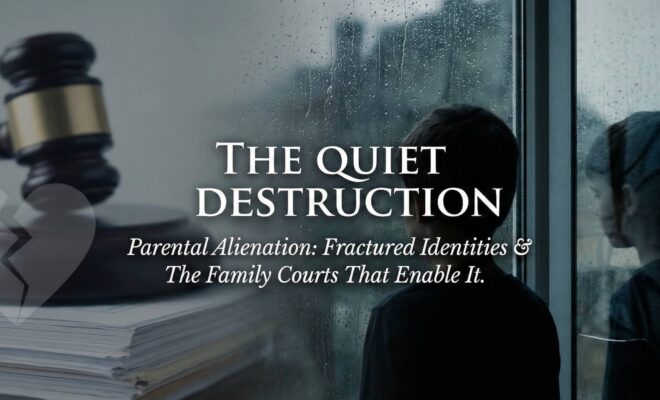
Letter To Parents Suffering: Parental Alienation My 8 Signs & How To Understand Them
Like They Taught Us On Saturday Mornings……The More You Know
Listen. I grew up in an era where we drank from garden hoses, rode bikes without helmets, and our parents had no idea where we were until the streetlights came on. We raised ourselves on MTV, apathy, and a healthy distrust of authority. We developed a thick skin because we had to. But let me tell you something: nothing (and I mean nothing) prepares you for the absolute gut-punch of Parental Alienation.
I have been fighting this war since 2012. I’ve researched more on this topic than I ever studied in school because I lived it. It was my entire existence as a parent. You learn very quickly in this game that everything you do is being watched, recorded, and twisted by the abusive parent. It’s a surveillance state within your own family tree.
You buy your kid a pizza? You’re a “bad parent” for feeding them junk food. You buy a video game the other parent doesn’t allow? That’s “proof” you don’t respect rules. It is a rigged game. A high-stakes poker match where the other side can see your cards and is dealing from the bottom of the deck.
For a while, I thought I was winning. I thought I had combated the abuses. I was wrong. In the end, considering my situation, I failed. Parental alienation is a silent creeper. If left unchecked for years, it produces a dangerous situation that can feel life-threatening to your soul. And let’s be clear: the courts? They aren’t coming to save you.
Defining the Monster: What is Parental Alienation?
Now, obviously, there are some bad parents out there who deserve to be “left in the dark.” Unfortunately, some alienation is justified. If there is real child abuse, every human being has a duty to report it. Long gone are the days where people “don’t get involved.” You should get involved. You have to.
However, in most cases I’ve seen (and certainly in mine) abusive parents use alienation as a weapon. It is a tool of control. The abusive parent encourages a manipulative estrangement that causes children to refuse to have a relationship with the targeted parent. It is the result of exaggerated or false information designed to dissuade an emotionally vulnerable child away from the targeted parent.
It happens all the time. And the family courts? They either ignore the targeted parent or, worse, they actually enable the abuser.
They create the perfect petri dish for the abusive parent to take full control and ensure the child is fully engulfed in the illusion.
Despite my efforts (I literally begged the court NOT to place my son in a situation of total control with his abusive parent) they didn’t listen. I told them in black and white that their orders were going to foster the very alienation I had kept at bay for a decade. Sure enough, after a year of being solely with the abusive parent, I heard the words from my own child’s mouth. This week, I heard him say how awful I am. How great his mother is. How he never wants to see, hear, or be near me.
These words would have stung me to the point of no return if I hadn’t been prepared. I literally knew what was going to be said before it was said. That knowledge is power. It deflates the court and the abusive parent because you stop reacting and start observing.
The 8 Signs Your Child Has Been Programmed
If you have heard these words from your child, or if you are just now experiencing the early tremors of parental alienation, here is my guide. You need to understand that the words coming from your child’s mouth are not their fault. They are a script.
My child is in his late teens, but this applies across the board. Most studies suggest that many alienated children don’t realize the extent of the manipulation until they are older. Often in their early twenties when their brains are fully mature. Knowing this is key to your survival. It helps you cope with the cruel reality your child is putting you through.
1. Denigration (The Smear Campaign)
You will notice this when the child repeatedly complains about you over and over again. Often, a therapist will hear a “normal” complaint about a parent say, a poor quality meal or not getting the “cool” sneakers. But in alienation cases, the abusive parent (let’s say they only buy organic) twists your pepperoni pizza into a crime against humanity. Suddenly, feeding your kid is one of the most awful things a parent can do. That’s the campaign. The volume of the complaint does not match the reality of the “crime.”
2. Frivolous Rationalization
This is the second symptom, and it drives you mad. The child will give some silly, nonsensical reason for not wanting to ever see the targeted parent again. “I don’t want to see Dad because he chews too loud.” In lots of cases, it’s a generalization without specifics. They hate you, but they can’t quite articulate a valid reason why. It’s just a vibe they’ve been fed. Even worse, whatever it is happens to be so traumatizing that they don’t even want to bring it up – supposedly.
3. Lack of Ambivalence (The Black and White World)
A really interesting symptom is called “lack of ambivalence.” Real relationships are messy. They are ambivalent. There are good points and bad points to everyone we know. That’s normal human interaction. Children suffering from parental alienation have zero ambivalence. They see one parent as totally good and the other as totally bad. “My mother is an angel and my father is a devil.” Kids can be convincing, but when pressed, they can’t give a rational, specific reason for this extreme polarization.
4. The “Independent Thinker” Phenomenon
This one is insidious. It’s important to note that I’m not criticizing children for thinking independently. I’m Gen X; independent thought is my religion. But this is different. There are some children who spontaneously say, “These are my ideas about my father. I thought of this all by myself. Nobody influenced me.” The child goes out of their way to defend the alienator before you’ve even accused them. It’s a preemptive strike. They use large, clinical words that don’t fit their age group. That is the script talking.
5. Reflexive Support
This involves the child always choosing the side of one particular parent in any given argument. A typical situation might involve a family meeting. Regardless of the topic, it could be about what color to paint the fence, the child will automatically side with the preferred parent and automatically disagree with the targeted parent. Even when the targeted parent clearly has the better option for the child (like, “Hey, maybe let’s not play in traffic“), the child will side with the abuser. It is automatic. It is reflexive.
6. Absence of Guilt
These children can be very disrespectful and say or do horrible things with absolutely no qualms. They can commit actions of violence on the target parent and have zero remorse. They show a total disregard for the parent’s feelings. It does not bother them at all to do or say these horrible things. Especially online. The cruelty is the point. Don’t let it bother you. It’s not their fault.
7. Adult Language and Rehearsed Complaints
When a seven-year-old suddenly accuses you of “never providing emotional support” or claims you “abandoned the family unit,” those are not the words of a child. Those are words that came from an adult. Pay attention to when criticisms sound scripted or mirror specific complaints from your co-parent. If your teenager sounds like a divorce attorney, you have a problem.
8. Spread of Animosity
The final symptom refers to the spread of hate to other people. If the father is the targeted parent, the child’s hate spreads to his family members like aunts, uncles, grandparents. Even though these relatives have done nothing wrong, the child will suddenly hate them and never want to see them solely because of their connection to the rejected parent. In extreme circumstances, I’ve seen this animosity extend to the targeted parent’s pets. “I hate your dog because it’s your dog.” It is irrational and total. But again, notice, no specifics.
The Family Court Trap: Stop Waiting for Justice
It is vitally important to recognize these signs early, but here is the hard truth: recognizing them is only half the battle. The other half is surviving the system that allows it.
Like me, if you experience this level of parental alienation, the best approach is to educate yourself. The next thing is the most difficult thing to do: Stay calm. Continue to love your child. Realize that the harsh words are not really them.
Above all… this is the moment you need to stop looking at your child like the person you remember. They are not that person anymore.
Frankly, I don’t even like this new person my son has become. His words are full of pride as the “new and improved” person that they believe they are. But I will repeat this over and over: It is not their fault.
This is hard to comprehend. I often thought, “How can he be saying this? It’s not how our life was at all.” The psychological damage being done to a child deep in alienation means they simply cannot have a rational thought. Their brains haven’t developed enough to process the manipulation. Your child loves both parents, but the abusive parent is showing them a path of least resistance. The abuser is often the “savior” who gives them everything they want to buy their loyalty.
Thinking Like a Judge (The Sad Reality)
So, how did I emotionally handle it? Well, keep in mind, I am not a therapist. But what I have learned is that Parental Alienation is taboo in family court. In some courts, bringing it up makes you look like the problem. It’s controversial.
The key for me was to take off the blinders. I had mine on for a whole year. I convinced myself that one day his memories would return. Do not do this. You will suffer more than you realize. Instead, look at your child for who they are in that very moment. The kid talking to me had my son’s body, but that wasn’t my son.
In my case, the Cheshire County Attorney‘s office essentially killed my son.
They allowed a long history of parental alienation to take hold and handed a sledgehammer to any ability to reconcile.
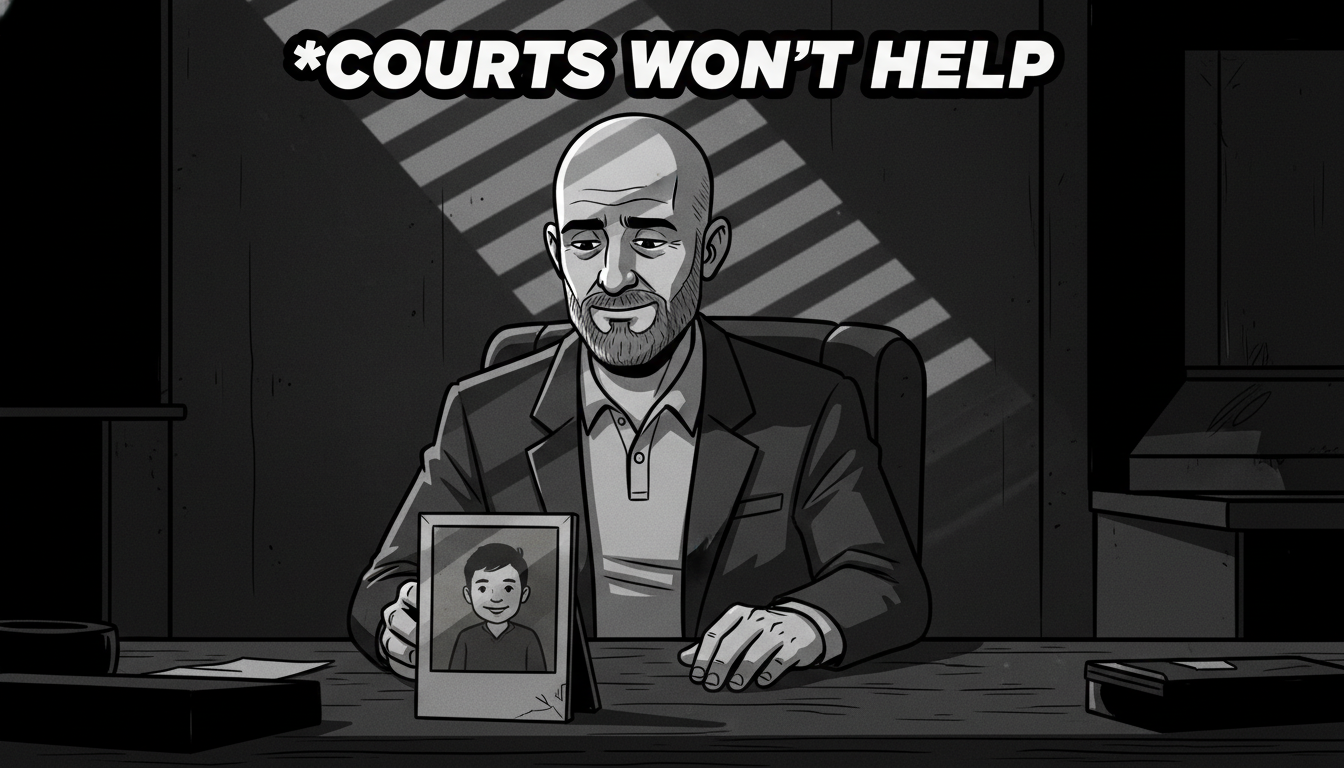
I’ve read so many things from parents who are devastated, waiting for “family court” to correct things. They won’t. Stop waiting. Stop filing. Stop thinking the courts are going to help you. The worst part of family law is that they place the “wants” of the child in high regard, often ignoring the manipulation behind those wants. The family court will always err on the side of caution. What judge wants to be the one who sided with a parent that the child claims to hate? It isn’t worth the risk to their career.
You need to learn how to “think like a judge.” Judges want cases off their docket. They want the path of least resistance. If the kid says they hate you, the judge often shrugs and says, “Well, what can I do?”
The Civil Court Strategy: Taking Back Control
Judges have far too much power in family court. Add a juvenile element, and suddenly the hearing is under “juvenile seal,” which means anything said is buried. Truth or not. Once you understand that family court isn’t going to help you, the next step is to realize that there is more than one forum.
Family court loves the juvenile protection element. They can cut corners. They can do things that they couldn’t get away with in an adult court hearing. When you understand this calmly, you have an advantage. I’ve spent the past year researching everything I can about family courts and contested custody. In a large percentage of these hearings, due process is thrown out the window.
Do yourself a favor: Write everything down. Catalog everything the court, attorneys, the judge, parents, and children do or say. I bet you will find some sort of misstep or “oddity.” These court actors get sloppy because they are confident in the seal. They don’t think anyone is watching.
This is why civil courts can be a lifeline. In my situation, the massive amount of inconsistencies and irregularities warrant litigation. Civil cases are open to the public. They can be a jury trial. A jury of your peers hearing your parental alienation story is a lot more powerful than the secret rooms and backroom deals of the family court system.
The Hardest Lesson: Acceptance
Your child is dead. The one you knew? You will never see them again in that form. Always leave the door open for reconciliation, but come to terms with the fact that what you want… what you are missing… is gone. Then, ask yourself: do you truly like this new person who is clearly not good for you?
Fight in the proper forums. Document the injustice. But emotionally?
You have to let go. At least for now….
Hopefully, a piece of the child you love will be resurrected one day and they will see you clearly. Until then, as painful as it is, this child is just as toxic as the abusive parent.
I still love and miss my son. I have a lot of compassion for what he is going through. But I also know the child I remember is gone. Frankly, I have no desire to be with this new person he has been programmed to be. He’s not the kid I remember at all. Perhaps in time, part of him will return, and I will be right here. Until then, they are just another victim of the courts.
To the adults who believe they are helping these kids by enabling this: You aren’t. Kids need both parents. Instead of finding blame, give the child peace. That is the only legacy worth leaving.
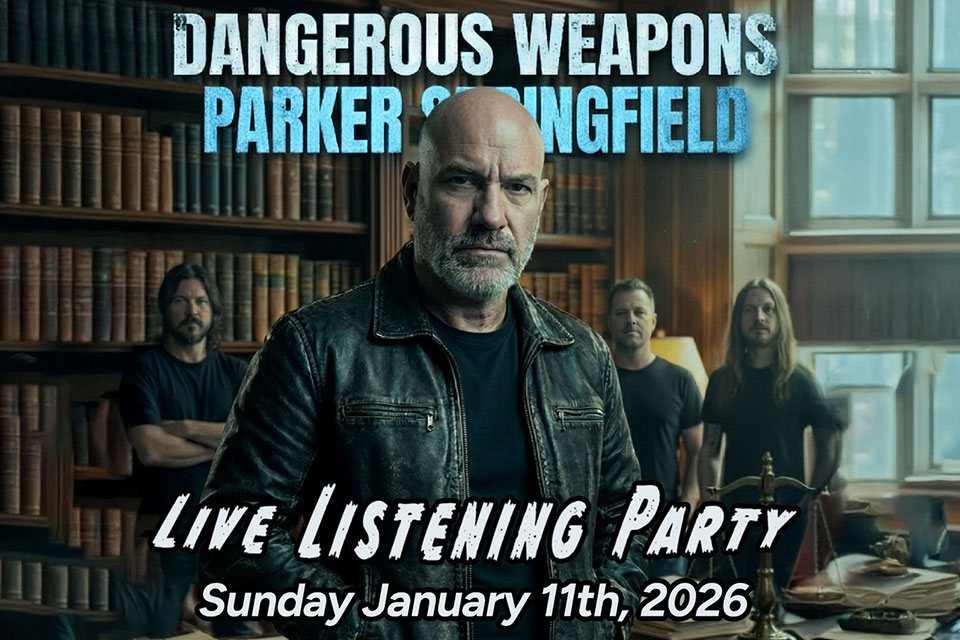
While speaking up in family court my arguments were called “Dangerous Weapons” by the opposing party. Sounded like a great album title to me.
Click For Details
Join me live Sunday January 11, 2026 @7pm on Facebook.