
FU Officer, Q by Parker Springfield | Review by Skip Terknov
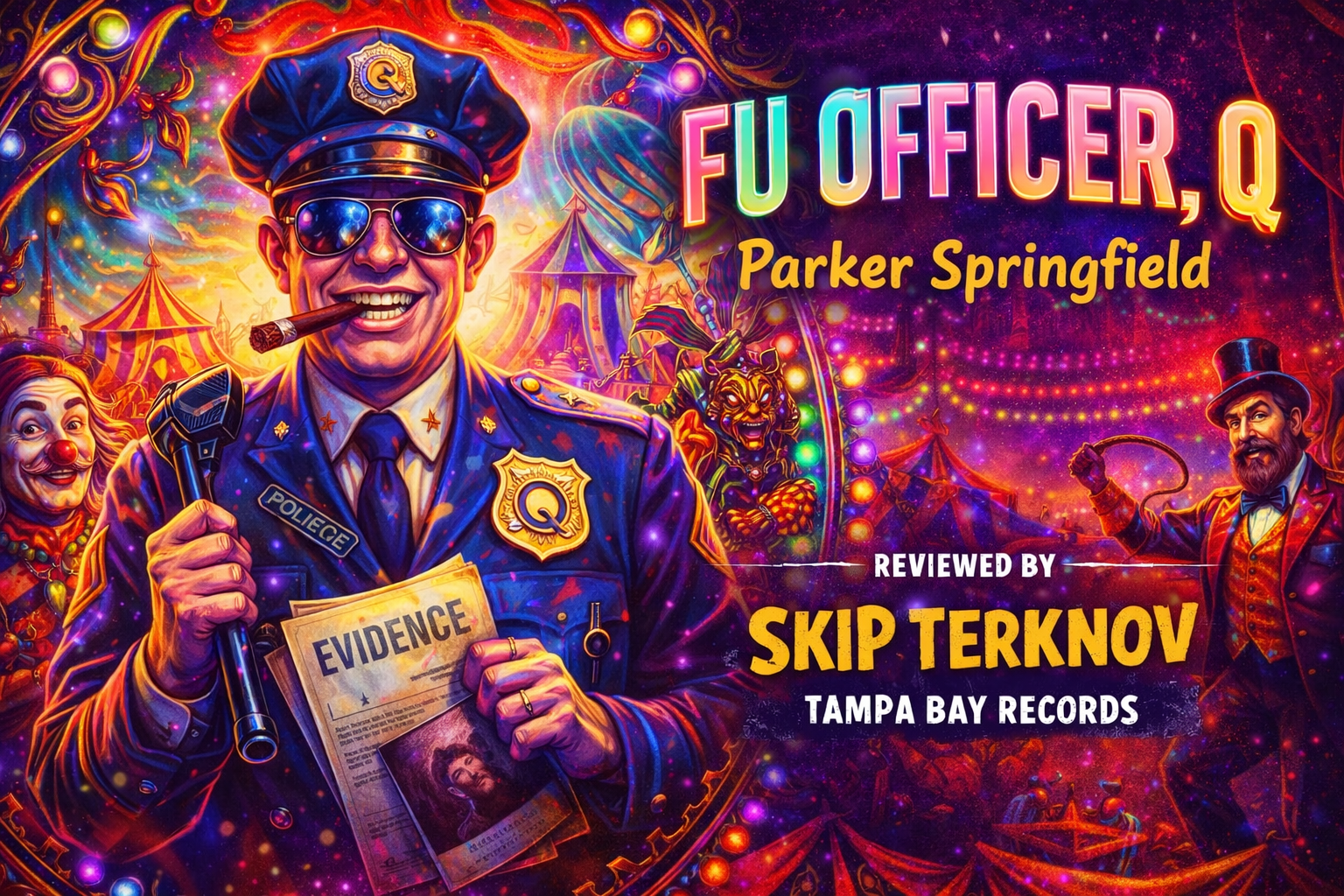
“FU Officer, Q” is Parker Springfield at his most theatrical and most fearless. Inspired by the surreal brass and pageantry of The Beatles’ Sgt Pepper’s Lonely Hearts Club Band, the song unfolds like a carnival act designed to entertain first and accuse second.
From the opening spoken introduction, the listener is dropped into a twisted sideshow. This is not realism. This is satire. Springfield builds a world where corruption is dressed in costume, where manipulation wears makeup, and where the truth hides behind velvet curtains waiting for the lights to hit just right.
Musically, the track leans heavily into psychedelic pop tradition. Bright tones, playful rhythms, and a sense of controlled chaos drive the arrangement. There is a deliberate contrast between sound and subject. The music smiles while the lyrics sneer. That dissonance is exactly what gives the song its power.
The verses are clever without becoming cluttered. Springfield uses wordplay as weaponry, turning bureaucratic language into absurd theater. Copy machines, redactions, and rearranged timelines are transformed into props. The imagery feels almost cartoonish, which allows the critique to land without becoming heavy handed.
The chorus is blunt by design. After the swirling circus setup, the message snaps into focus. It is not subtle, and it is not meant to be. The repeated accusation functions like the ringmaster’s announcement, calling attention to the act everyone is pretending not to see.
The bridge is one of the song’s strongest moments. The idea of evidence humming under stage lights is a powerful metaphor. Truth as something alive, restless, and impossible to fully silence. The suggestion that records remember what people try to erase gives the song emotional gravity beneath its playful skin.
What makes “FU Officer, Q” work is its commitment to performance. Springfield never breaks character. He understands that satire is most effective when it commits fully to the illusion. By presenting corruption as entertainment, he exposes how easily misconduct can hide behind procedure, authority, and spectacle.
Despite the obvious provocation of the title, the song never descends into chaos or sloppiness. It remains structured, melodic, and intentional. This is protest filtered through psychedelia, outrage delivered with a grin painted on.
“FU Officer, Q” does not sound angry in the traditional sense. It sounds amused. And that may be its most dangerous quality. It treats corruption not as something powerful, but as something ridiculous once the curtain is pulled back.
In the spirit of Sgt Pepper, Springfield reminds us that sometimes the most effective truth telling comes not from shouting, but from staging a show so absurd that the audience finally starts paying attention.
Skip Terknov
Tampa Bay Records